The World Federation of Tourist Guide Associations (WFTGA) is following the current situation in Iran with deep concern. Our thoughts are with our Iranian colleagues, with whom we share long-standing professional relationships, personal friendships and a common commitment to the guiding profession.
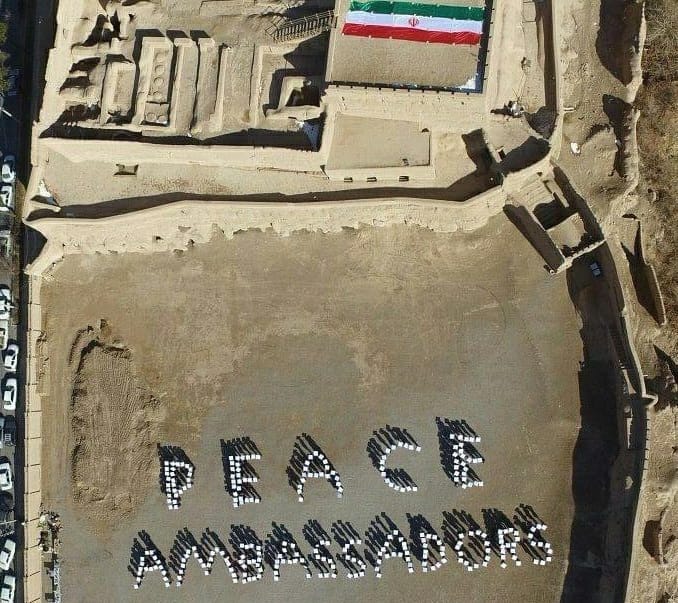
In 2017, the WFTGA held its international convention in Iran. Participants experienced extraordinary hospitality, openness and professional exchange. These encounters reaffirmed the role of tourist guides as cultural mediators and, as they are often described, peace ambassadors. The image accompanying this statement, taken during that convention, reflects this shared identity and sense of global collegiality.
Since that time, we have remained in close contact with colleagues in Iran. Until very recently, Hussein Dehghan and Davoud Dehghan, WFTGA Area Representatives, and Dr. Banafsheh M. Farahani, Lead International Trainer, were in regular communication with us. Due to the ongoing protests and the regime’s internet shutdowns, this contact has now been abruptly interrupted. We are deeply concerned for their safety and for all colleagues who are currently unable to communicate freely.
This statement is not a political declaration. The WFTGA is committed to political neutrality. However, neutrality does not mean indifference. What we wish to express is solidarity with tourist guides as professionals and as colleagues, particularly those working under conditions of repression, conflict or restricted freedom.
Tourist guides occupy a unique position in society. They interpret history and heritage, facilitate encounters between people and cultures, and help visitors understand complex realities. For this reason, guides also carry a clear ethical responsibility.
Neutrality does not require silence. Where history, social injustice and present-day realities are intrinsically linked, guides should address sensitive issues in a factual, balanced and respectful manner. This includes acknowledging human rights, democratic principles and the dignity of all people, while avoiding propaganda or the imposition of personal political views.
These principles are central to the new Code of Guiding Practice currently being developed by the WFTGA, which will be discussed with our global membership at our upcoming convention in Fukuoka. The Code emphasises the role of tourist guides as educators, cultural ambassadors and bridge-builders, committed to ethical practice, professional integrity and universal values.
In our earlier statement “Tourist Guides and War”, we recognised that guides are often among the first to be affected by crises – through loss of work, restricted communication or personal risk. This reality is not limited to Iran. It affects colleagues in many parts of the world, including those living and working in contexts of war, occupation or political repression, such as our members in Ukraine, Israel, Russia and beyond.
Many tourist guides operate in environments where open dialogue is constrained and communication channels are fragile. This reinforces the importance of the WFTGA as a global, politically neutral platform that maintains professional connections across borders, even between societies that are in conflict. Our federation exists to keep these human and professional links alive, grounded in respect for cultural heritage, dialogue and mutual understanding.
As we look ahead to our next convention and our visits to Hiroshima and Nagasaki, we are reminded of the lasting consequences of violence and the enduring importance of memory, education and ethical reflection. These are responsibilities that tourist guides carry every day in their work.
To our colleagues in Iran, and to all tourist guides worldwide facing difficult and uncertain conditions:
You are not forgotten. You are part of our global guiding community. And we stand in solidarity with you.